Showing posts with label doe. Show all posts

Wednesday, October 31, 2012

A Samhain of Coyote, Deer and Mist


On this old, dark, deep holiday—called Samhain in the ancient Gaelic traditions— which is a celebration of the dead, the ancestors, the harvest brought in, and also of a new year, I wish upon you all the blessings of coyote and deer, the kind of heavy mist that brings the colors of the land out, spiderwebs hung with rain, the tangled bare branches of buckeyes, the new bodies of mushrooms, springing up like perfect cities.

I find it beautiful, and instructive too, that in older, land-rooted traditions, the new year was celebrated at this time of gathering darkness, when all the buckeyes and the grasses and the apple trees are putting their energy down in their roots, for the dark sleep of winter. By the time our western New Year rolls around in January, new grass is already poking up its green hair, flowers are starting to open up again. We forget that all the work has already been going on, down there where the dead go—leaf mulch and fox and worm, the bones and flesh of all things. In the darkest time, new seeds are gathering up their tiny hearts to grow. What a different mindset this forces one into! To acknowledge that all growing things need first to root in the humus, the dark soil, to germinate beneath the ground, in the underworld.

Today I drove out to Point Reyes to look for bobcat tracks (it's beginning, to me, to feel like hunting for treasure, for little metacarpal pad grails). It was misty and damp and dark, and all the creatures showed themselves.


Let me just say, this was almost a car-accident in the making. I saw him dart off the road ahead of me, and, well, I just stopped the car and got out! Good thing no one was behind me (it is a narrow country road after all)— I was downright quivering with the joy of seeing this beautiful coyote so close. (This is a problem I sometimes have--driving slightly off the road to peer out at hawks, etc.)

He was no more than ten feet from me, and we held one another's gaze for quite some time before he began to slink away, glancing back several times over his shoulder. Myself, I was in a state of mild euphoria, staring after, wishing so badly to be able to hear him truly, to speak back. He is a trickster, a seducer too, that cream and gold and grey coyote with his almond-elegant eyes, watching with a tiny smile.


The bobcat of Abbott's Lagoon, padding past misted marsh rosemary. He (or she-- or perhaps a mother with adolescents?) uses the edge of the lagoon, it's marshy border, daily, hunting the waterfowl.


Quite a busy lady! These tracks are probably from this morning, between rain and mist.
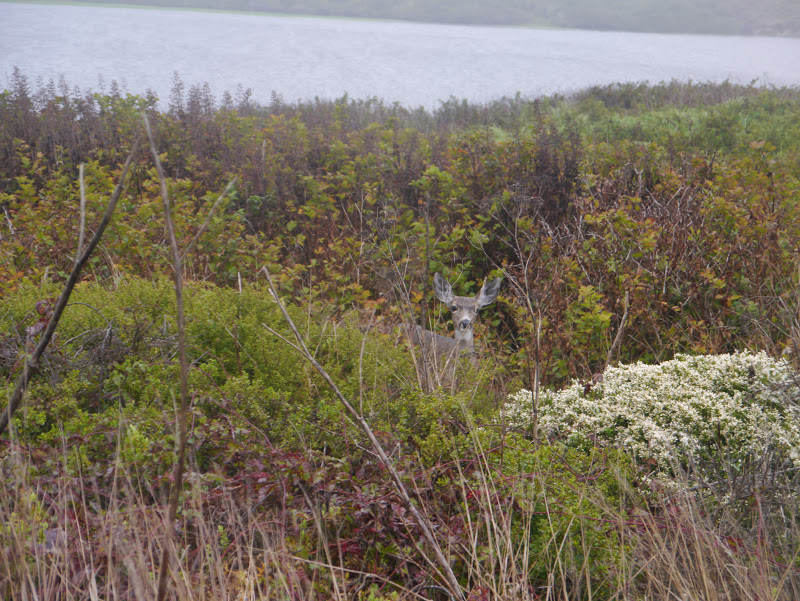

And we surprised this doe while she was eating her afternoon meal. She only blinked at us with perfectly black eyes, those lashes delicate and tapered.


The spiderwebs held onto the mist, making their own small universes, places for chaparral-imps to lay down for a rest.


And the cows, far away between the hills, grazed gently, with black calves bounding between them.

In this dark turning toward winter, in this time of wild storms and the remembrance of the dead, the animals are beside us, always just over the fence, watching. Samhain is thought to be the day when the veil between worlds is thinnest, when ghosts and old spirits and magical creatures pass through the mist. I don't know if there were spirits out today as I walked the Abbott's Lagoon fog, but the wild things were certainly wandering, with that rich dark animal otherworld in their eyes. That is a deep magic, and we all walk amidst it every day-- past the pigeons on city streets, the hawks hunting over freeways, the mountain lions way up in the hills.

A deep dark delightful pagan new year to you all!

Thursday, August 2, 2012

Turtles on the Lake in the Morning


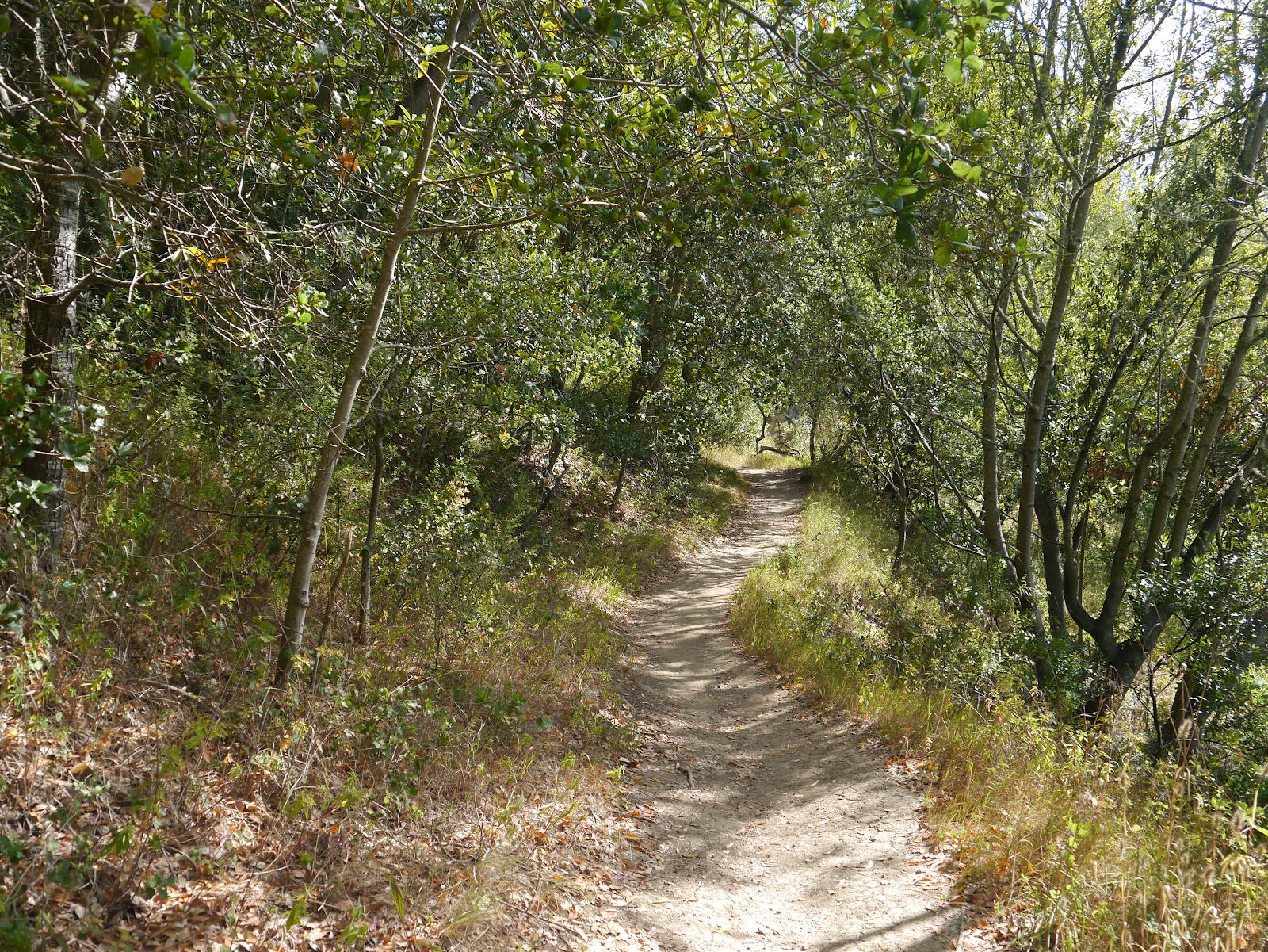
This familiar path, down the hill a little ways from our home, smells of coast live oak leaves, dust, bay laurel, that spice almost like cinnamon in the dry mild air. I am always amazed how quickly the mind quiets once I'm off the paved road where cars pass and houses line the way.


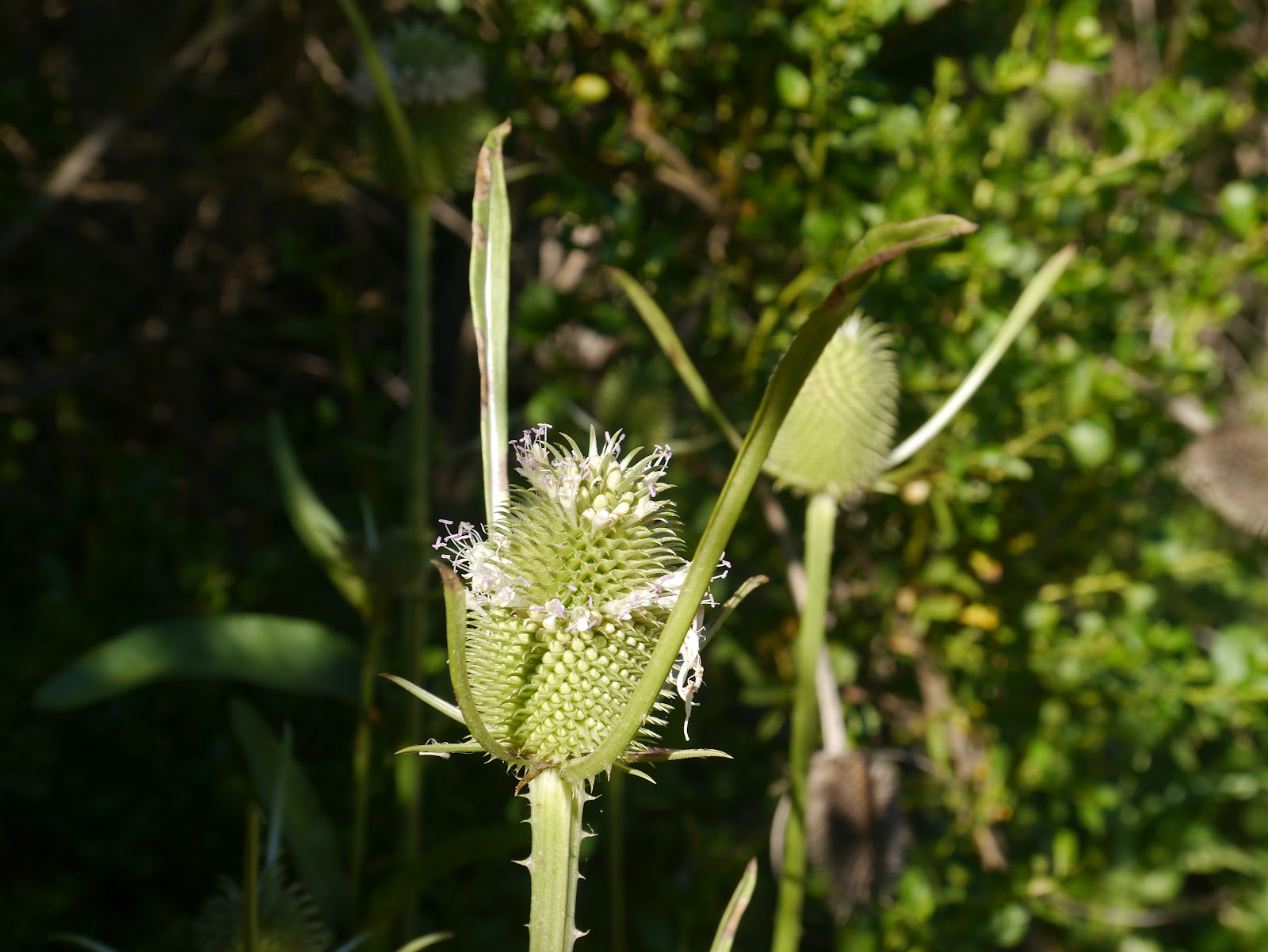
A thistle-head, going to seed. Still some strands of purple flower hanging on, silken and shining. The goldfinches wait to build their nests until the thistles look like this, so they can use all that down for bedding. Wise creatures.


It was still early enough that human shoes hadn't yet covered up the deer prints from the night. Like two hearts, pressed into the dust, quite small. At dawn, perhaps, a young doe made her way slowly up this same path, foraging calmly. I like to put my fingers in the tracks, imagine the creature they belong to, say hello. When you look hard and long at the shapes made by human shoes, they start to look like strange arcane patterns, carved like spells into the dirt, not anything so mundane as the soles of sneakers.


Down below the oak and bay laurel forest, the thickets begin. The hedgerows, though these were never planted by humans. A path was just carved right through the brambles and vines. Currants, blackberries, thimbleberries, elderberries. To the right, the willow bushes begin, a great labyrinth of warrens and tangles, home to great numbers of woodrats, gray foxes, badgers, weasels, brush rabbits and no doubt a bobcat or two, not to mention songbirds. I am enchanted by it, by the mystery of all the tunnels and passageways.


Who lives in there? Many, many beings, some of them watching me at this moment no doubt.


I passed an old antler rub from last autumn or before. Stags seem to enjoy rubbing their antlers on willow in particular during the rut. Maybe it has antiseptic or soothing properties when absorbed through antler-velvet!


Two turtles sat quietly in the sun on Jewel Lake. The ripples on the surface reflected against the alder leaves and branches. They seemed to be pulsing, like you could see the tree-blood moving through.


So many tunnels and caverns and dens. I love the feeling of walking upon the narrow ribbon of the path that cuts between, knowing that all around me a wild maze of homes tangles and shivers with small particular lives.


Like this fellow, who left wet footprints all along a small wooden walkway by the stream. A striped skunk I think, emerging from the willows after having a drink.

It is good for the mind and for the soul, to leave the human-full streets a while, in the morning, before your thoughts have taken over, and remember all the other lives that happen around you every day— skunk, spotted towhee, doe, big old oak.

Friday, June 15, 2012

The Magic of Teasel


The bodies of those spiked plants I crooned over in my last post speak a strong language. They reached out and sang their strange, spindle-pricking song to me, and as it turns out, they are very potent indeed. It was not just my imagination.
My wonderful cousin Lyda informed me that this is teasel, or dipsacus fullonum. Its native homelands are the continents of Europe, Asia and Northern Africa. It is considered an invasive weed in North America. (A difficult concept for me—aren’t the majority of us here “invasive”?) It turns out that the word “to tease,” as in “to tease out a knot” is the root for the name “teasel” because the dried heads were used for centuries as carding combs, before metal spines were created in factories. If you run your fingers over one, dried a dark gold, you will understand why—they are taut and strong, so robust they make a plucked melody under your fingertips. Cobwebs get caught around them. I could untangle knots in my hair with a single empty seedhead without breaking it.


The Latin name fullonum is related to the word “to full” which means “to card wool before spinning.” A fuller is a person who cards wool. The first part of the Latin name, dipsacus, means “to thirst” in Greek, and refers to the way the leaves gather water in their green bowl around the stem. Ancient Roman’s called teasel “Venus’s Basin,” and Christian’s “Mary’s Basin.” Perhaps they collected the water for their own joints. Teasel eases arthritis.
Plant biologists, on the other hand, speculate that these dew-receptacles prevent insects such as aphids from climbing anywhere near the flowers. They’ve filled up the bowls with dead bugs to test the results, and have found that the more rotting insects in that basin of Venus, the more seeds the teasel head produces. In other words, teasel absorbs the nutrients of dead bugs through its stem-bowls. It is partially carnivorous. That water is holy for the plant as well people—it is its own composting system.
Romany gypsies gathered rainwater from those teasel-bowls and used it for wrinkles and dark circles under the eyes. A common name for the plant is “gypsy-comb.”


Japanese Teasel has been used in Chinese medicine for thousands of years. They call the plant Xu Duan, which means, “restore what is broken.” Japanese teasel root is used for arthritis, blood circulation, kidney cleansing and the healing of damaged tissues. In North America, herbalists such as Matthew Wood have discovered that common teasel can be used to treat lyme disease. A few drops of teasel-tincture can sniff out lyme disease bacterial cells where they hide, burrowed in joints. It chases them right into your blood, out of hiding, where other forms of medication can then destroy them.
Other medicinal uses I’ve discovered include: wort-cure, antibiotic, and eyewash.
           
There are powers deeper than words and deeper than songs that rest in the bodies of the plants all around us. Their characters are written in their shapes and colors, their curves and spines and flowers. This too is its own language, separate from the language of deer mouse tracks, vole tunnels, bobcat scratches, and thrush songs. Teasel is dressed in elegant, wily green armor. She guards her own.
Now I see why the deer take big, eager bites from the teasel leaves. They know their own midwifery better than any of us. I’d bet it was the does, cleansing their blood, soothing their joints, after the weight of fawn-birth.

None of this is to say that, at night, strange forms do not rise up from those basins, those carding-comb pods. Slight, tendriled figures that walk barefoot, dispense water from green leaf-bowls to mother creatures as they give birth—raccoons, squirrels, deer, snakes. Comb the burrs from their tails. Take the stray fur-pieces home and spin them into ropes for climbing down, down into the underworld, where necessary knowledge about rebirth, about chasing pain out of tight spaces, lives, pushed into deep quartz veins by the songs of moles. Where knowledge about smoothing out tangles and keeping the heart clear resides.

Illustration by Arthur Rackham


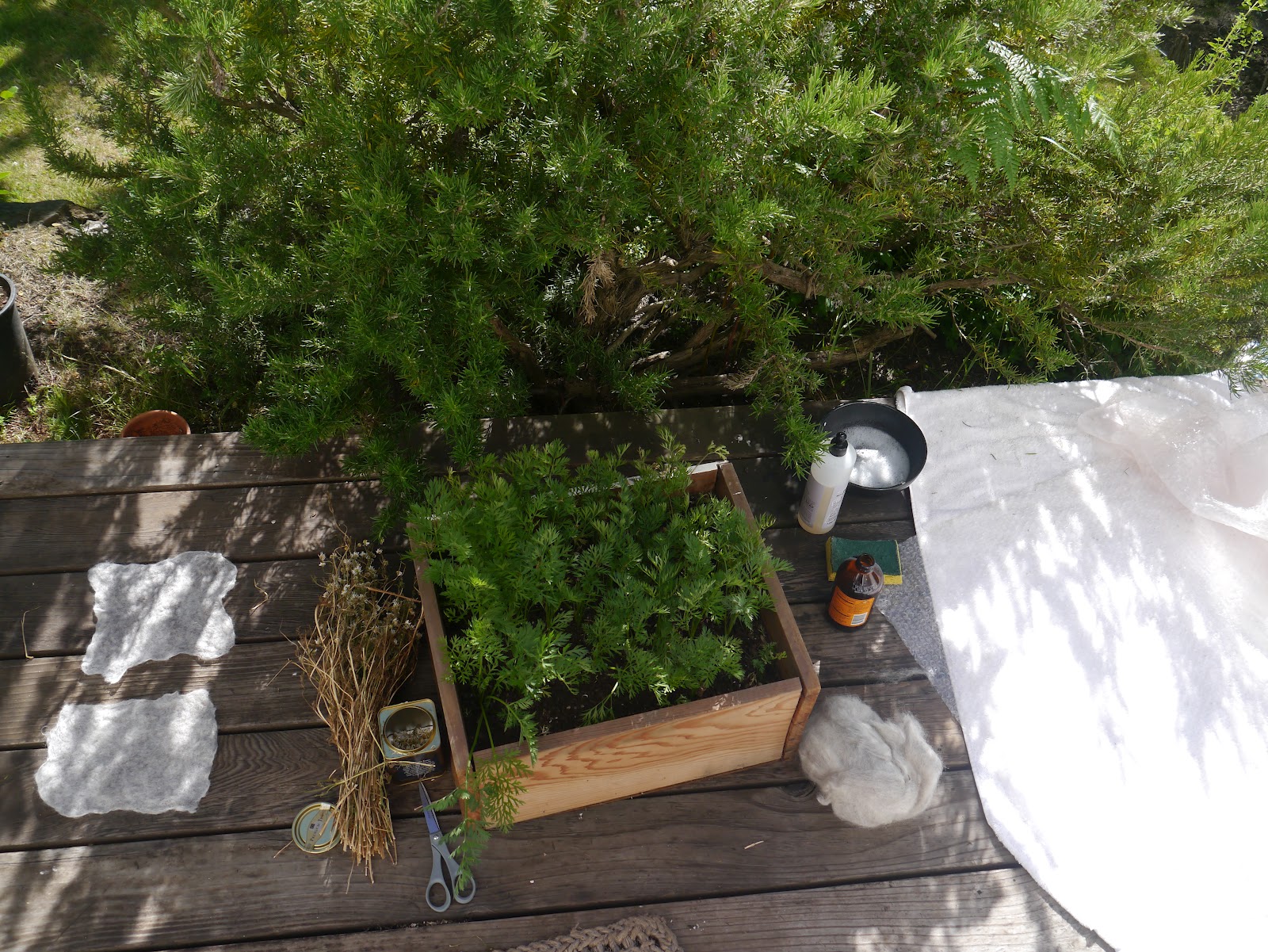
            This week, I’ve also been at work on a felting project. I love the feeling of rolling and shaping felt, soapy warm hands and sore arms, the smell of wet wool. Because it’s wet and a bit messy, it really demands to be made outside, on the deck, by the rosemary. The sun on my back. Listening to young blue jays screech, the towhees cheep. Having a ginger ale or a beer. Each piece of felt is a surprise, still alive in its form. You never know what it will be until it’s done, the edges rippled like an animal hide. The act of felting is meditative. It warms up the body and quiets the mind.
            I’m embroidering these with vegetables: first a sweet pea. I’m working on an artichoke and a carrot now. For hanging in the kitchen, or wherever you like. Honoring the forms and bounty of vegetables. I plan to make a variety of creatures too—fox, elk, owl, heron. More (and  better) photos coming soon. 

I think I'll try combing a bit of uncarded wool I have with a teasel head, too.